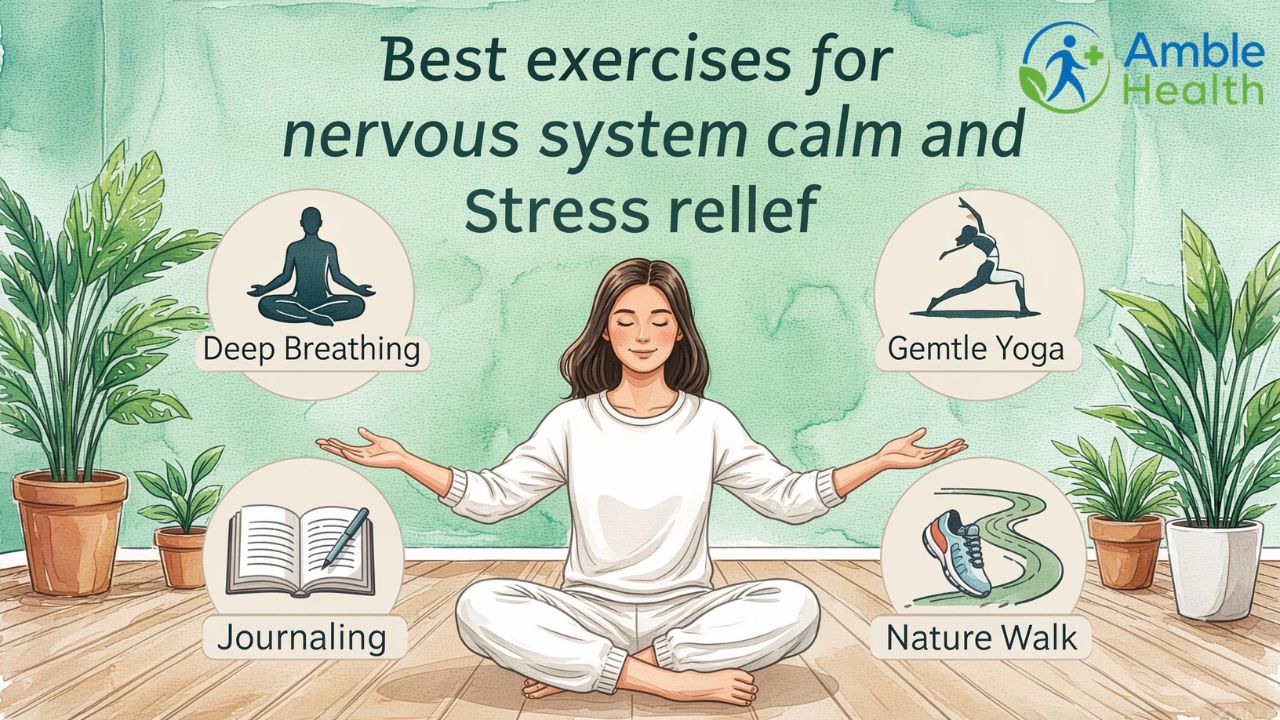

Introduction
Some days, your body feels like it is running an emergency drill even when nothing is technically wrong. Your shoulders creep toward your ears, your breathing gets shallow, your mind races, and rest starts to feel strangely out of reach. That is why learning the best exercises for nervous system support can feel less like another wellness trend and more like finally finding the dimmer switch your body has been asking for.
Your nervous system is constantly reading the room. It listens to your breath, posture, movement, surroundings, sleep, stress, and even the speed at which you move through your day. When it senses pressure for too long, it can keep you stuck in a state of alertness. The right exercises help send a different message: you are safe enough to soften, breathe, focus, and recover.
The good news is that you do not need extreme workouts or complicated routines to feel a shift. In fact, for many people, the most helpful practices are gentle, rhythmic, repeatable, and easy to fit into normal life.
This guide walks you through practical movement and breathing exercises that support calm, resilience, body awareness, and better recovery. Think of it as a grounded, body-first approach to feeling more settled in your own skin.
How Exercise Helps the Nervous System
Your nervous system includes your brain, spinal cord, and the network of nerves that help your body sense, respond, move, digest, sleep, and repair. One part often discussed in relation to stress is the autonomic nervous system. It includes the sympathetic branch, which helps you mobilize during challenge, and the parasympathetic branch, which helps you slow down, digest, connect, and recover.
Exercise affects this system in several ways. Movement can help discharge restless energy, improve circulation, support sleep, and reduce the physical tension that builds when stress hangs around too long. Slower practices, such as breathing drills and mindful movement, can also give your body clear signals of safety.
That does not mean every workout is calming. A hard sprint session may feel amazing for one person and overwhelming for another, especially during a season of burnout, poor sleep, or high anxiety. The goal is not to force your body into calm. The goal is to choose the right type of input for the state you are in.
What Makes an Exercise Nervous-System Friendly?
A nervous-system friendly exercise usually has at least one of three qualities: rhythm, breath awareness, or a sense of control. Rhythm helps the body predict what is coming next. Breath awareness slows the pace and brings attention back to the present. Control reminds your brain that you can choose, pause, and adjust.
The best exercises for nervous system support are often simple enough to repeat without overthinking. They may include walking, gentle yoga, stretching, slow strength work, tai chi, somatic shaking, or breath-led mobility. None of these need to be performed perfectly. In fact, trying to do them perfectly can turn a calming practice into another performance task.
A helpful rule is to ask, “Do I feel more connected to my body after this?” If the answer is yes, you are probably on the right track. If you feel more wired, irritable, dizzy, or depleted, scale down the intensity, shorten the session, or choose a gentler option.
The best exercises for nervous system regulation
Below are the most practical options to try. You can use one at a time, combine two or three, or build a short daily routine around the exercises that feel most natural.
1. Slow diaphragmatic breathing
Diaphragmatic breathing is often called belly breathing, although the real action happens as the diaphragm moves and the lower ribs expand. It is one of the simplest ways to shift out of shallow chest breathing and into a steadier internal rhythm.
Try this: sit or lie down comfortably. Place one hand on your chest and one hand near your lower ribs. Inhale through your nose for four seconds, letting your ribs widen. Exhale slowly for six seconds, as if you are fogging a mirror with your mouth closed. Repeat for two to five minutes.
A longer exhale is especially useful when you feel keyed up. It gives your body a clean, repeatable pattern to follow. Keep the breath smooth rather than dramatic. Bigger is not always better; comfortable and consistent is the goal.
2. Physiological sighs
A physiological sigh is a quick way to release built-up tension. It uses two inhales followed by a long exhale. Many people naturally do something similar after crying, intense focus, or a stressful moment.
To practice it, take a deep inhale through your nose, then add a second small inhale before exhaling slowly through your mouth. Do this one to three times. You do not need a full session. This is more like a reset button you can use before a difficult conversation, after an argument, or when your thoughts are moving too fast.
Because it is stronger than regular slow breathing, use it gently. If you feel lightheaded, stop and return to normal breathing.
3. Mindful walking
Walking is underrated because it seems too ordinary. But its rhythm, gentle cardiovascular effect, and left-right movement make it a powerful tool for stress relief. A mindful walk is not about burning calories or hitting a step goal. It is about letting your body move at a pace that tells your mind, “We are not trapped.”
Start with ten minutes. Let your arms swing naturally. Notice your feet meeting the ground. Look around and name five neutral or pleasant things you see: a tree, a window, a patch of sky, a color, a shadow. This simple orientation practice can help pull attention away from looping thoughts.
For extra benefit, walk outside when possible. Natural light, fresh air, and a broader visual field can make the experience feel more regulating than pacing indoors.
4. Gentle yoga
Gentle yoga combines breath, movement, balance, and attention. That mix is why it often appears in discussions about the best exercises for nervous system health. The key word is gentle. You are not trying to twist yourself into impressive shapes. You are creating a moving conversation with your body.
A beginner-friendly sequence might include cat-cow, child’s pose, low lunge, seated forward fold, legs up the wall, and a supported rest pose. Move slowly enough that your breath can stay easy. If your breath gets strained, back off.
Gentle yoga is especially helpful in the evening because it can transition the body from doing mode into resting mode. Keep the lighting soft, avoid competitive classes when you are already stressed, and use props without hesitation.
5. Tai chi and qigong
Tai chi and qigong are slow, flowing movement practices that combine posture, breath, attention, and balance. They are excellent for people who want calming movement but do not enjoy lying still or traditional meditation.
These practices work because they give the mind something soft to focus on. Your weight shifts. Your hands move through space. Your breath follows. The body stays active, but the pace remains low and steady.
A simple qigong-inspired exercise is “gather and release.” Stand with knees slightly bent. As you inhale, float your arms outward and upward as if gathering air. As you exhale, let the arms drift down in front of the body. Repeat for three to five minutes.
6. Progressive muscle relaxation
Progressive muscle relaxation teaches your body the difference between tension and release. This is valuable because many people are so used to being tight that tension starts to feel normal.
Begin at your feet. Gently tense the muscles for five seconds, then release for ten seconds. Move through calves, thighs, glutes, belly, hands, arms, shoulders, jaw, and face. Do not clench aggressively. Use about 50 percent effort.
This practice is particularly useful before bed or after a stressful day. It turns relaxation into a physical skill rather than a vague idea. You are not telling your body to relax; you are showing it how.
7. Somatic shaking
Somatic shaking is exactly what it sounds like: intentionally allowing the body to shake, bounce, or tremble in a controlled way. Animals often shake after a threat passes. Humans tend to suppress that impulse, even when the body is still buzzing with adrenaline.
Stand with soft knees. Gently bounce through your legs. Let your arms, shoulders, and jaw loosen. Keep your breathing easy. Continue for 30 seconds to two minutes, then pause and notice what changed.
This exercise can feel silly at first, which is part of its charm. It interrupts stiffness and helps move stress energy through the body. If shaking feels uncomfortable or emotionally intense, keep it brief and return to grounding through your feet.
8. Mobility flows
Mobility work keeps joints moving through comfortable ranges of motion. For nervous system support, the aim is not maximum flexibility. It is smooth, curious, pain-free movement.
Try neck circles, shoulder rolls, wrist circles, spinal waves, hip circles, ankle rolls, and gentle side bends. Move as if you are oiling rusty hinges. The slower you go, the more information your brain receives from your body.
Mobility flows work well in the morning because they help you check in before the day takes over. They are also helpful during screen-heavy workdays, when the body gets stuck in the same folded posture for hours.
9. Low-intensity strength training
Strength training may not sound calming, but it can be deeply regulating when done at the right intensity. Slow squats, wall push-ups, glute bridges, farmer carries, and controlled rows give the body a sense of stability and capability.
The trick is to avoid turning every session into a test. Choose weights or bodyweight movements that allow steady breathing and clean form. Rest between sets. Stop with energy left in the tank.
For people who feel anxious, strength training can be grounding because it brings attention to pressure, contact, and muscular effort. You feel your feet on the floor. You feel your hands gripping. You feel your body producing force in a controlled way.
10. Restorative stretching
Restorative stretching uses support, stillness, and time. Unlike active stretching, the goal is not to push into intensity. The goal is to let your body feel held enough to release.
Try a supported child’s pose with a pillow under your chest, a reclined butterfly pose with cushions under your knees, or legs up the wall for five to ten minutes. Keep the stretch mild. You should be able to breathe easily the whole time.
This is one of the best exercises for nervous system recovery after a long day because it reduces input. There is less to do, less to track, and less to achieve.
11. Humming and extended exhale breathing
Humming is a gentle way to lengthen the exhale and create vibration around the throat, chest, and face. It can be surprisingly soothing, especially when paired with slow breathing.
Inhale through your nose. Exhale with a soft hum until the breath naturally runs out. Pause briefly, then inhale again. Repeat for one to three minutes. Keep the sound low and comfortable.
You can use this while driving, showering, cooking, or winding down for sleep. It is discreet enough to fit into daily life, and it gives restless energy somewhere to go.
12. Swimming or water walking
Water can be regulating because it provides pressure, rhythm, and sensory feedback. Swimming adds coordinated breathing, full-body movement, and a feeling of support. Water walking offers similar benefits for people who prefer a gentler option.
Keep the pace easy. Try slow laps, relaxed floating, or walking back and forth in chest-deep water. Notice the feeling of water against your skin and the rhythm of your breath.
For some people, water exercise is especially helpful because it reduces joint stress while still allowing the body to move freely.
How to Choose the Right Exercise for Your Current State
The best exercise depends on whether your body feels wired, flat, tense, scattered, or restless. Matching the practice to your state makes it easier to feel better without forcing a result.
If you feel anxious or overstimulated, start with longer exhales, gentle walking, restorative stretching, or legs up the wall. If you feel shut down, heavy, or foggy, try sunlight, a short walk, mobility flow, or light strength training. If you feel angry or charged, somatic shaking, brisk walking, or controlled strength work may help use that energy safely.
A simple matching guide
- Wired and tense: slow breathing, progressive muscle relaxation, gentle yoga
- Restless and agitated: walking, shaking, tai chi, qigong
- Foggy and low: mobility, sunlight walk, low-intensity strength training
- Emotionally overwhelmed: grounding through the feet, humming, supported stretching
- Screen-fatigued: shoulder rolls, spinal mobility, outdoor walking
There is no perfect choice. The body often responds better to experimentation than rigid rules.
A 15-Minute Daily Routine
If you want a simple starting point, use this routine for one week. It is short enough to repeat and balanced enough to touch breath, mobility, movement, and rest.
Begin with two minutes of diaphragmatic breathing. Then do three minutes of mobility: shoulder rolls, cat-cow, hip circles, and ankle rolls. Follow with six minutes of mindful walking or slow marching in place. Finish with four minutes of legs up the wall or supported rest.
This routine includes several of the best exercises for nervous system support without asking for a major lifestyle overhaul. You can do it in the morning, after work, or before bed. The best time is the time you will actually repeat.
Common Mistakes That Keep the Body Stuck in Stress
One common mistake is choosing exercise that is too intense for your current capacity. Hard workouts can be healthy, but when you are already running on stress hormones and poor sleep, more intensity is not always the answer.
Another mistake is expecting instant calm. Sometimes the first thing you notice is how tense you are. That does not mean the exercise failed. It means your awareness is coming back online.
People also underestimate consistency. A five-minute practice repeated daily often does more for regulation than a long session once in a while. Your nervous system learns through repetition.
Finally, avoid judging your response. Some days breathing works. Other days walking works better. Your body is not a machine, and your routine does not have to be identical every day.
Safety Tips Before You Begin
Most of these exercises are gentle, but it is still wise to listen closely to your body. Stop if you feel chest pain, faintness, sharp pain, unusual shortness of breath, or symptoms that concern you.
If you have a medical condition, are recovering from injury, are pregnant, or have a history of trauma or panic attacks, consider working with a qualified health professional. Some body-based practices can bring up strong sensations or emotions, and support can make the process safer.
Start smaller than you think you need to. Two minutes of breathing, one lap around the block, or three supported stretches can be enough. A regulated body is built through trust, not force.
FAQ
What are the best exercises for nervous system calming?
The most calming options are usually slow breathing, mindful walking, gentle yoga, tai chi, qigong, progressive muscle relaxation, humming, and restorative stretching. The right choice depends on whether you feel anxious, tense, restless, or depleted.
How long does it take to regulate the nervous system with exercise?
Some people feel a small shift within a few minutes, especially with breathing or walking. Bigger changes usually come from consistent practice over weeks. Think of it as training your body to recover more easily, not flipping a switch once.
Can intense workouts help the nervous system?
Yes, intense workouts can support mood, sleep, and resilience for many people. However, they are not always ideal when you are exhausted, overstimulated, injured, or under heavy stress. Balance challenging workouts with lower-intensity recovery practices.
Is walking good for the nervous system?
Walking is one of the most accessible choices because it combines rhythm, movement, visual orientation, and steady breathing. Outdoor walking can be especially helpful when you need to clear your head and reconnect with your surroundings.
What is the easiest exercise to start with?
Slow breathing is the easiest because it requires no equipment, space, or special clothing. Try inhaling for four seconds and exhaling for six seconds for two minutes. Keep it comfortable and relaxed.
Can stretching calm the nervous system?
Yes, gentle stretching can help, especially when it is slow, supported, and paired with easy breathing. Avoid forcing deep stretches. Mild, comfortable positions usually work better for relaxation.
Should I exercise when I feel anxious?
Often, yes, but choose carefully. A short walk, gentle shaking, breathing, or mobility may help. If anxiety feels severe or comes with worrying physical symptoms, seek medical guidance.
How often should I do nervous system exercises?
A few minutes every day is a strong starting point. You can also use short practices during stressful transitions, such as after work, before sleep, or after a difficult conversation.
Conclusion
The best exercises for nervous system support are not about pushing harder, performing better, or adding another demanding task to your life. They are about building a better conversation with your body.
Some days that conversation may look like a quiet walk. Other days it may be three deep breaths, a few minutes of shaking, a slow yoga pose, or a gentle strength session that reminds you of your own steadiness.
Start with what feels doable. Repeat it often enough that your body begins to recognize the pattern. Over time, these small practices can help you feel less trapped in stress and more at home in yourself.